
How to write an essay introduction is one of the most common questions students ask when starting an assignment. And it’s an important one—because your introduction sets the tone for everything that follows. A strong opening not only grabs the reader’s attention but also clearly explains what your essay is about.
But a great intro doesn’t exist in isolation. It’s just one piece of the larger puzzle: your essay’s overall structure. If you’re unsure how all the parts fit together—from the introduction to the conclusion—make sure to check out our full guide on Essay Structure before diving in. It’ll give you the big picture you need to organize your ideas effectively.
In this guide, you’ll learn how to write an introduction for an essay that is clear, engaging, and properly structured. We’ll walk through what makes a good essay opening, break down each part step by step, and show you examples to make things easier. Whether you’re writing a school paper, a college assignment, or an exam response, mastering the introduction will help you write better essays overall.
By the end, you’ll know exactly how to start an essay with confidence—and how to avoid common mistakes that weaken your writing.
What Is the Purpose of an Essay Introduction?
Before you learn how to write an introduction, it’s important to understand why it matters.
An essay introduction does more than just start your paper — it sets the stage for everything that follows. Its main job is to help the reader understand what the essay is about, why the topic matters, and what point you’re going to make.
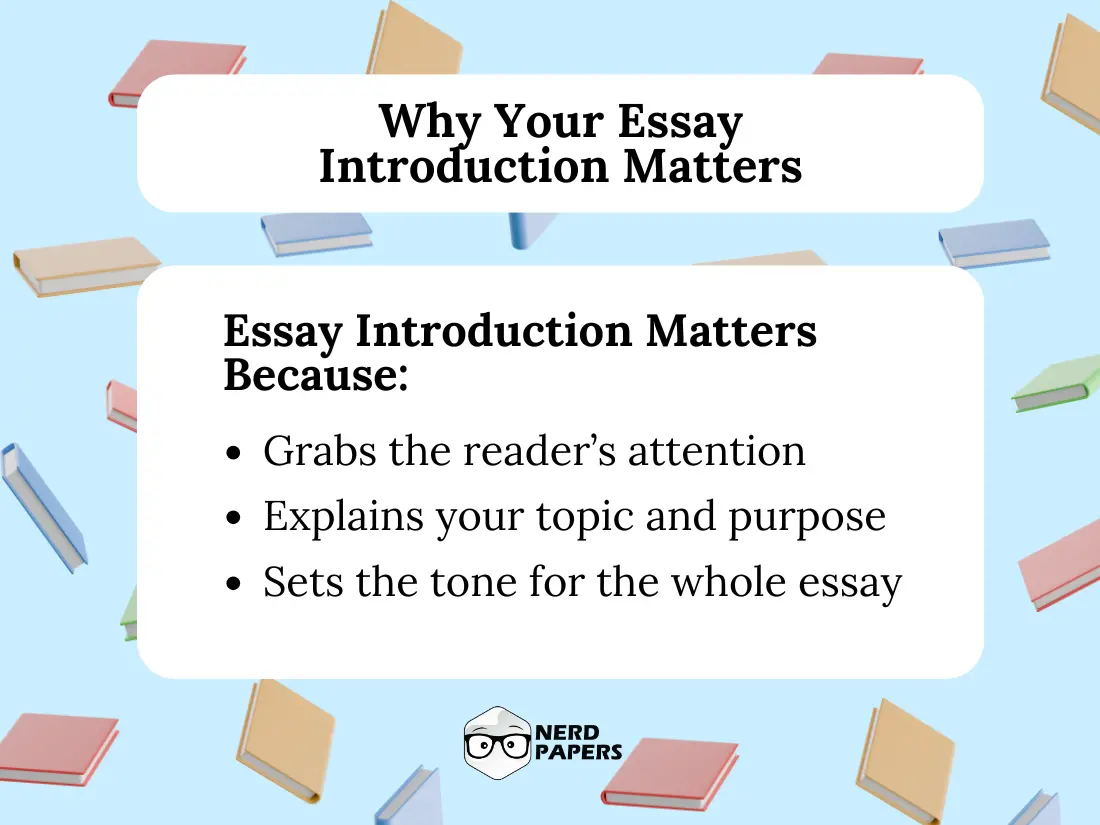
Whether you’re writing a persuasive, narrative, or expository essay, the introduction works like a guide. It gives your reader a reason to care, sets the tone for the essay (formal, reflective, analytical), and leads them smoothly into the main argument.
Think of it like a first impression — if the introduction is clear and engaging, the reader is more likely to stay interested and trust what follows.
Key Components of an Essay Introduction
A strong essay introduction includes three essential components. These parts work together to lead your reader into the topic smoothly and clearly.
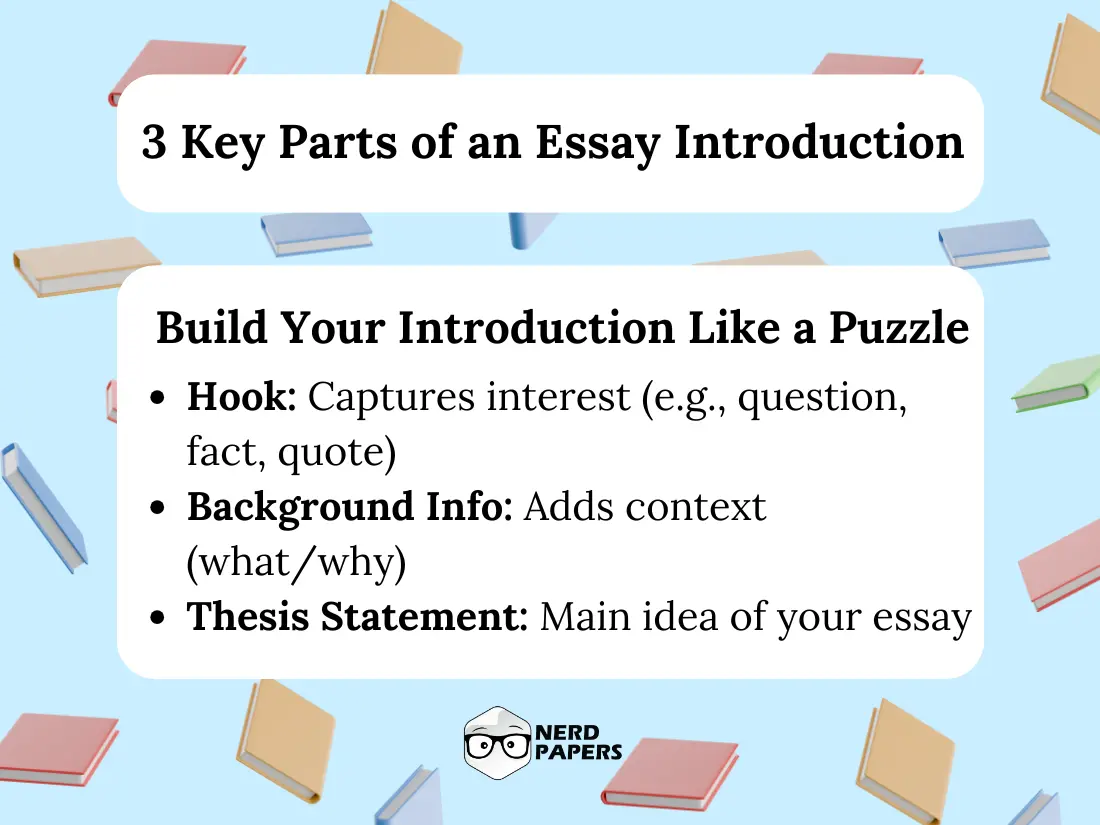
1. The Hook – Grab Attention
Your hook is the first sentence of your essay. It should grab the reader’s attention and make them want to read more.
Common hook types:
- A surprising fact or statistic
- A thought-provoking question
- A short anecdote or scenario
- A bold statement
Example: “Imagine waking up at 5:30 AM every day just to get to school on time.”
For more hook types and real examples, check out our full guide on how to write effective essay hooks.
2. Background Information – Build Context
After the hook, give your reader some basic background so they understand the topic. This might include:
- A brief explanation of the issue
- Any important definitions
- Historical context (if needed)
Keep it short—just enough to help the reader understand your thesis.
3. Thesis Statement – The Main Idea
Your thesis statement comes at the end of the introduction. It’s the most important sentence in your intro. It tells the reader:
- Your main point or argument
- What the essay will discuss or prove
Example thesis: “Schools should start later in the day because it improves student health, focus, and academic performance.”
Step-by-Step Process to Writing an Essay Introduction
A well-crafted essay introduction isn’t just written — it’s built. In fact, it’s part of a larger structure that includes the body and conclusion.
In this step-by-step section, we’ll walk through how to structure your essay’s first paragraph so it’s engaging, informative, and perfectly aligned with your topic.
Step 1 – Understand the Purpose
Before writing anything, understand why the introduction matters. It’s not just the first thing your reader sees — it’s the part that:
- Grabs attention (hook)
- Gives context (background)
- Clearly states your main point (thesis)
Think of the introduction as your essay’s “first impression.” It should guide the reader smoothly into the topic and give them a reason to keep reading.
At a glance, your intro should:
- Set the tone
- Establish relevance
- Preview what’s coming
Step 2 – How to Start an Essay
Starting an essay can feel tricky — but with the right approach, you can hook your reader from the first sentence.
Why Your First Line Matters
The first line sets the tone. If it’s dull or unclear, readers may lose interest quickly. But a strong opening pulls them in and makes them want to know more.
Common Ways to Start an Essay:
- Ask a question
Example: “Have you ever wondered why some students perform better in morning classes?” - Share a surprising fact
Example: “Teens need 8–10 hours of sleep, but most get less than 7.” - Use a short anecdote
Example: “Jake, a high school junior, starts every school day exhausted.” - Make a bold statement
Example: “School start times are hurting student success.”
Quick Dos & Don’ts
| Dos | Don’ts |
| Start with an engaging sentence | Begin with a dictionary definition |
| Stay relevant to the essay topic | Use vague generalizations |
| Set the tone for the rest of the essay | Ramble or go off-topic |
Step 3 – Add Background Information
Once you’ve hooked your reader, the next step is to give them some context. This helps them understand your topic before you present your main argument.
Why Background Info Matters
Background information gives your reader the “what” and “why” of your topic. It sets up the issue or situation you’re going to discuss and narrows it down toward your thesis.
It should be:
- Brief (2–3 sentences)
- Directly connected to your topic
- Clear and easy to understand
What You Might Include:
- A short explanation of the issue
“Many schools start as early as 7:30 AM, despite research suggesting later times are healthier.” - A definition if the topic involves unfamiliar terms
“Sleep deprivation is a condition where a person doesn’t get enough rest over a period of time.” - A quick mention of history or trends
“In recent years, education experts have debated whether current school schedules support student well-being.”
Step 4 – Write the Thesis Statement
Your thesis statement is the most important sentence in your introduction. It tells your reader exactly what your essay is about and what they can expect from the rest of your writing.
What Is a Thesis Statement?
A thesis is a clear, direct sentence that states your main point or argument. It usually comes at the end of your introduction paragraph and connects your background info to the body of your essay.
What Makes a Strong Thesis?
- It’s specific, not too broad
- It makes a claim or takes a position
- It previews your main points (optional but helpful)
Example of a Good Thesis:
“Schools should start later in the morning because it improves students’ health, focus, and academic performance.”
This sentence tells the reader:
- What the essay is about (school start times)
- What the writer believes (they should start later)
- Why (health, focus, performance)
Examples of Essay Introductions
Seeing real examples can help you understand how to apply the components of an essay introduction — the hook, background, and thesis — in your own writing.
✅ Good Example of an Essay Introduction
Imagine waking up at 5:30 AM every day just to make it to school on time. While early schedules are common, many studies suggest they hurt students’ well-being and focus. Schools across the country are debating whether to adjust their start times to better fit teenagers’ natural sleep patterns. Schools should start later in the day because it improves student health, focus, and academic performance.
What works here?
- Hook: Starts with a relatable scenario.
- Background: Introduces the issue and sets up the topic.
- Thesis: Clearly states the writer’s position and main points.
❌ Weak Example of an Essay Introduction
School is important. Many people go to school. This essay will be about why school times should change.
What’s wrong here?
- The hook is vague and uninteresting.
- It lacks context or background.
- The thesis is unclear and doesn’t preview any main points.
Common Mistakes to Avoid in Essay Introductions
Even a strong topic can fall flat if your introduction doesn’t start well.
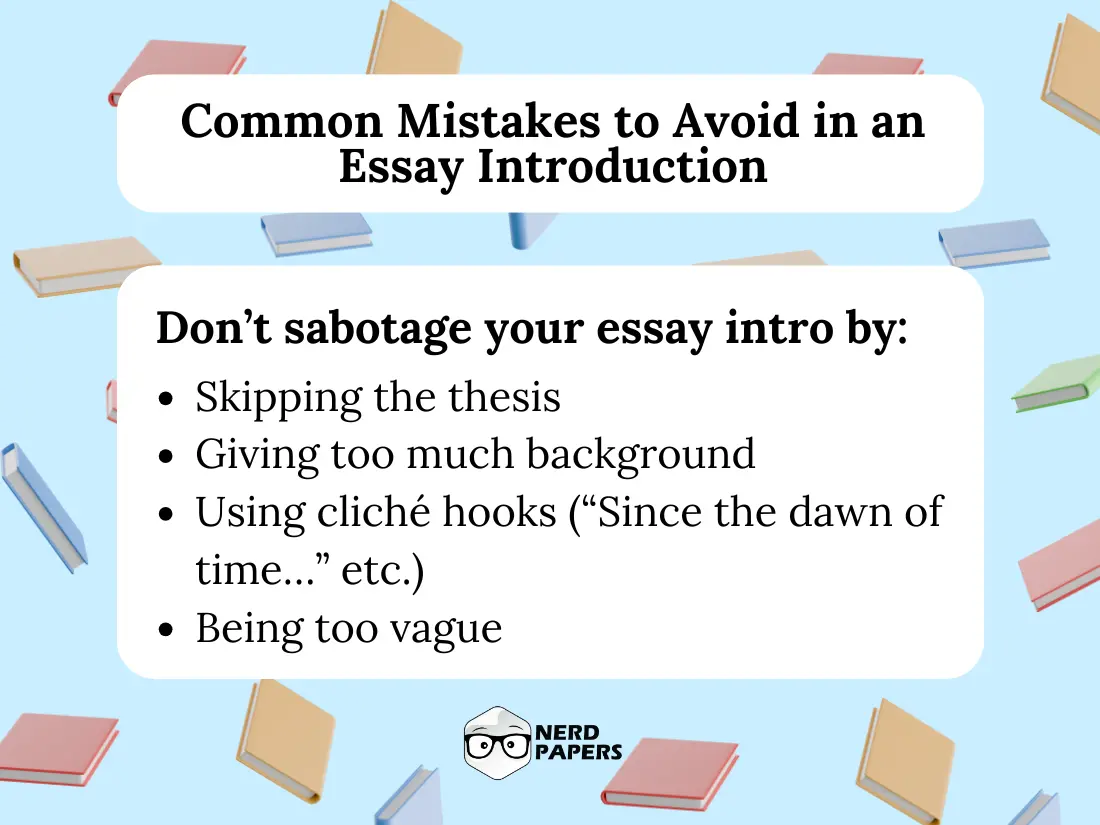
Avoid these common mistakes that many students make when writing the opening paragraph of an essay:
Being Too Vague or General
Example: “People have different opinions on many things.”
- Doesn’t connect to the essay topic
- Lacks direction or focus
👉 Tip: Be specific from the start. Set up the topic clearly.
Skipping the Thesis Statement
Example: Ending the introduction without a clear thesis
- The reader won’t know what the essay is about
- The body becomes confusing or disorganized
👉 Tip: Always include a clear thesis that previews your main points.
Giving Too Much Background
Example: Turning the introduction into a mini research paper
- Overwhelms the reader
- Pushes the thesis too far down
👉 Tip: Only include the context your reader needs to understand the topic.
Using Cliché or Boring Hooks
Examples: “Since the beginning of time…” or “In today’s society…”
- Feels lazy or overused
- Doesn’t grab attention
👉 Tip: Use a hook that’s fresh, relevant, and interesting to your audience.
Off-Topic or Unclear Opening
Example: Starting with an idea unrelated to your essay’s main point
- Confuses the reader
- Breaks the flow of logic
👉 Tip: Make sure every sentence leads naturally to your thesis.
Tools & Aids for Writing Essay Introductions
Writing a powerful essay introduction doesn’t always come easily—but there are plenty of tools that can help you write better, faster, and more clearly. Here’s a list of popular writing aids students and writers often use to polish their introductions.
Grammarly
A grammar and clarity tool that helps you catch mistakes and improve tone.
- Checks for spelling, punctuation, sentence structure
- Suggests clearer, more professional wording
- Offers tone adjustments to fit formal academic writing
Hemingway Editor
Helps simplify your writing and improves readability.
- Highlights hard-to-read sentences
- Flags passive voice and overuse of adverbs
- Gives a readability score
💡 Ideal for tightening a long, confusing introduction.
Thesis Statement Generators
Online tools like Thesis Generator by Ashford or Writing Center tools guide you in forming a focused thesis.
- You input the topic + supporting points
- It outputs a sample thesis for refinement
- Helps beginners and ESL students find direction
AI Writing Assistants (like ChatGPT)
You can get help brainstorming a hook, rephrasing weak sentences, or even checking tone.
- Ask for multiple hook options
- Get help paraphrasing your background
- Double-check thesis structure
🧠 Use AI as a starting point to generate ideas, but don’t rely on it entirely—always revise and personalize the content yourself before submitting your final work.
Outline Generators
Help you structure your intro in relation to the full essay.
- Ensure your hook, background, and thesis flow naturally
- Create a roadmap before drafting
- Prevents repetition or off-topic detours
Conclusion: Mastering How to Write an Essay Introduction
Writing a strong essay introduction isn’t just about starting with a catchy line — it’s about giving your reader a clear path into your ideas. Now that you know how to write an essay introduction, you can confidently craft hooks, add the right background, and build a focused thesis that sets the stage for your entire essay.
Remember: your introduction shapes the reader’s first impression, so make it count. Whether you’re writing a school assignment or a college-level essay, these steps will help you start strong and stay on track.
Frequently Asked Questions (FAQs)
To make sure you’re fully confident in crafting essay introductions, here are answers to some of the most common questions students ask.
How do I start an essay introduction?
Start with a hook — something that grabs attention. This could be a quote, a question, a bold statement, or an interesting fact. Then provide some background and finish with a clear thesis statement.
What is a hook in an introduction essay?
A hook is the opening sentence that pulls the reader in. Good hooks are interesting, relevant, and lead naturally into your topic.
Examples:
Did you know sleep-deprived students perform worse on tests?
Imagine starting school at 5:30 AM every day.
What should be in the introduction of an essay?
A good introduction includes:
A hook to grab attention
Background information to give context
A clear thesis statement to preview your main point
How long should an essay introduction be?
The introduction should be about 10–15% of your total essay length. For a 500-word essay, aim for 50–75 words.
How to write a strong thesis in the intro?
Make your thesis:
Specific (avoid vague terms)
Clear (state your position or claim)
Focused (avoid listing every point — save those for the body)
How do I make my essay introduction engaging?
Use a hook that feels natural and relevant. Keep sentences clear and to the point. Avoid over-explaining or being too formal at the start — especially for high school or college-level writing.
What to avoid in an introduction paragraph?
Avoid:
Starting with clichés like “Since the dawn of time…”
Skipping the thesis
Going off-topic
Making the intro too long or too personal
Can I ask a question in my essay intro?
Yes — asking a question is a great hook technique, especially if it’s thought-provoking and connected to your essay’s topic.