
If you were ever in a situation where you paused, sat, and thought for a moment about how to manage homework? You are not alone. Managing homework is more about managing time, stress, and mental strain, not just working more. If you feel stressed, it’s often because you have too many tasks and not enough time, not because you can’t do the work.
To manage homework well, focus on the tasks that are due soonest and those that are harder. Break them down into smaller steps and work in short, focused timeframes. This minimizes procrastination, overload, and speeds up work with less stress.
Sometimes managing many academic tasks requires more than better scheduling. Using a reliable, do my homework platform allows students to manage their academic overload without sacrificing their mental well-being or the quality of their submissions.
Key Takeaways: How to Manage Homework Without Feeling Overwhelmed
- Homework can sometimes feel too much when there are multiple tasks to do in a short time, not because students are lazy.
- Managing homework effectively starts with prioritizing deadlines, not doing everything at once.
- Breaking assignments into smaller steps reduces procrastination and mental pressure.
- Short, focused study sessions are more effective than long, exhausting hours.
- Homework stress is mainly a time-management issue, not a motivation issue.
- Workloads can be overwhelming, but assistance and planning can help.
Why Homework Feels Overwhelming Today
Homework often feels stressful. It is not because the homework is more difficult than before; rather, it is because the students are asked to handle more tasks with less time to rest. Having multiple subjects, overlapping deadlines, and constant phone and online distractions make even small assignments feel tiring.
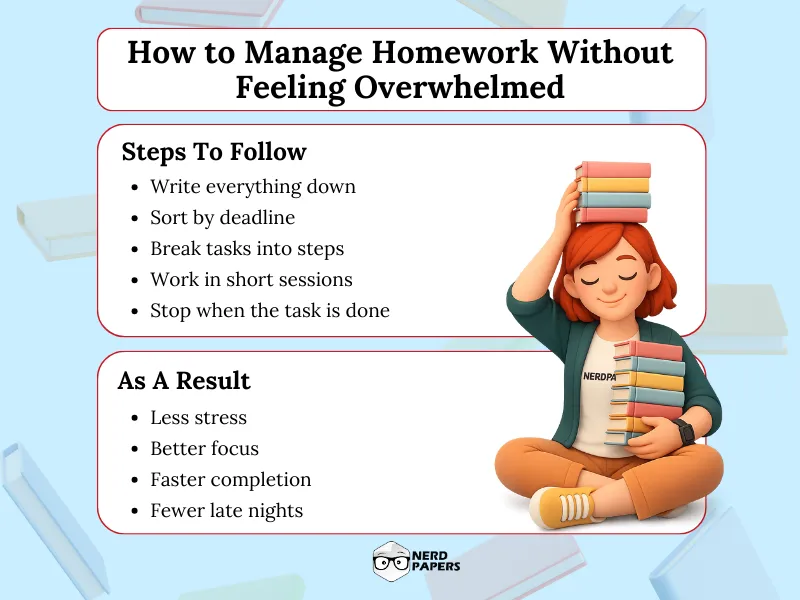
When students say they have too much homework and not enough time, the real problem is usually poor planning. Many assignments stay in their heads instead of being written down in a clear plan. This increases stress and makes it harder to focus. This can be resolved by writing it down properly in a planner so it’s clearly in front of you and you don’t skip anything.
Another big reason homework feels overwhelming is mental overload. Thinking about all assignments at once makes it hard to start. As a result, students put off their work, which leads to late nights and more stress.
This pattern of stress, delay, and anxiety is common in both high school and college students. It also affects mental health, which is why learning how to manage homework properly is important, not optional.
How to Manage Homework Overload Depending on Your Academic Level
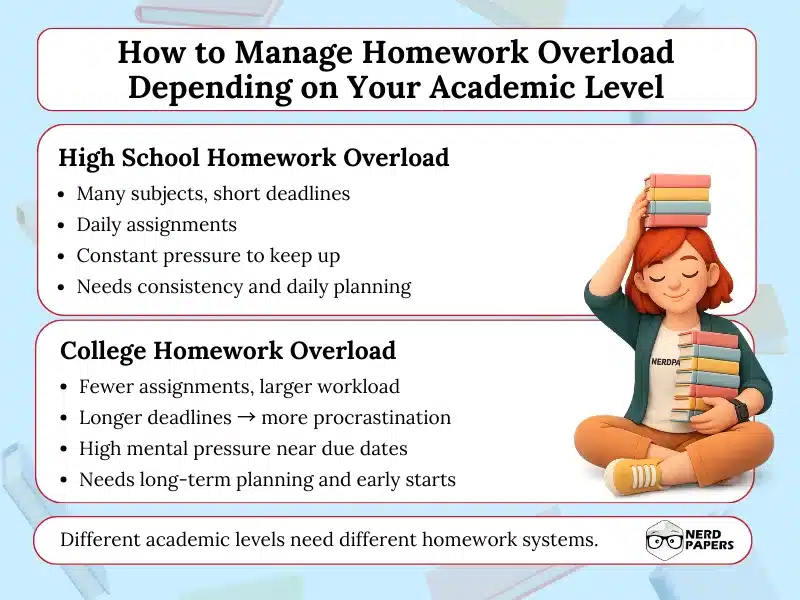
Homework overload happens when everything feels urgent, and nothing feels finished. The solution is not speed; it is structure. The workload patterns differ by academic role. The appropriate strategy depends on whether you are in high school or college.
How to Manage Homework Overload in High School
High school students often have homework from many subjects with deadlines. This makes it easy to feel constantly behind.
To manage homework overload in high school:
- List every assignment in one place instead of relying on your memory
- Sort tasks by due date first, then by difficulty
- Start with smaller or easier assignments to reduce mental resistance
- Use short study blocks to avoid burnout after school
When there are mltiple subject that you have to manage based on your homework, consistency matters more than intensity. Completing small tasks daily prevents last-minute stress and late-night studies.
How to Manage Homework Overload in College
College homework overload looks different. Assignments may be fewer, but they are longer and harder, with longer deadlines. This often leads many students to delay work until pressure becomes extreme.
To manage homework overload in college:
- Break large assignments into weekly action steps
- Plan backwards from the deadline instead of waiting until the last days
- Set personal deadlines earlier than the official ones
- Avoid stacking many major tasks in the same week
College students do better with homework when they plan it as part of their work.
How to Manage Time for Homework Effectively
Managing time for the homework does not mean you have to fill every free hour of your time with tasks. It is about deciding and properly planning in advance when and how work will be done. Without a plan, homework expands, stress increases, and productivity drops.
Scheduling homework like classes or work shifts is the best approach. When your study time is properly planned, homework stops competing with everything else in your day.
Create a Study Schedule That Works
A good homework schedule is simple and realistic. It shows what needs to be done and when, without overloading your day.
To create a study schedule that works:
- Plan homework by day, not by mood
- Assign time blocks to each subject instead of vague “study time.”
- Include buffer time for difficult or unexpected tasks
- Review and adjust the schedule weekly
Weekly planning is great for large projects and assessments, and daily for basic tasks. The best way to plan homework daily is to combine both the weekly overview and daily execution.
Balance Homework and Free Time
Homework becomes harder when students try to work nonstop. As a result your focus drops, and the tasks take longer than they need to.
To balance homework and free time:
- Use short, focused study sessions instead of long marathons
- Stop working once a planned task is complete
- Protect rest time to prevent burnout
Time management helps kids do assignments faster and feel less stressed.
How to Do Homework Faster Without Rushing and Compromising the Quality
Finishing homework quickly means saving time and planning well. It is not just about working fast. In most of the cases, homework takes longer because it isn’t planned clearly. When the tasks are clear and organized, students get more done in less time and focus better.
Use Smart Speed Techniques
These methods reduce friction and decision fatigue:
- Batch similar homework tasks to avoid mental switching
- Start with low-resistance tasks to build momentum quickly
- Set clear time limits to prevent overworking small details
- Work in short sessions instead of long, unfocused hours
This is how students realistically manage heavy nights, even when they feel overloaded.
Use Digital Tools and Planners to Save Time
Planning tools remove guesswork and help you stay focused:
- Google Calendar for blocking homework time and tracking deadlines
- Notion for organizing subjects, assignments, and progress
- To-do list for daily tasks and priority tracking
- Trello for large or multi-step assignments
Using a digital planner lets you see what to do next, reducing delays and helping you get started faster.
Simple Study Rules That Improve Speed
Structured systems improve focus and prevent burnout:
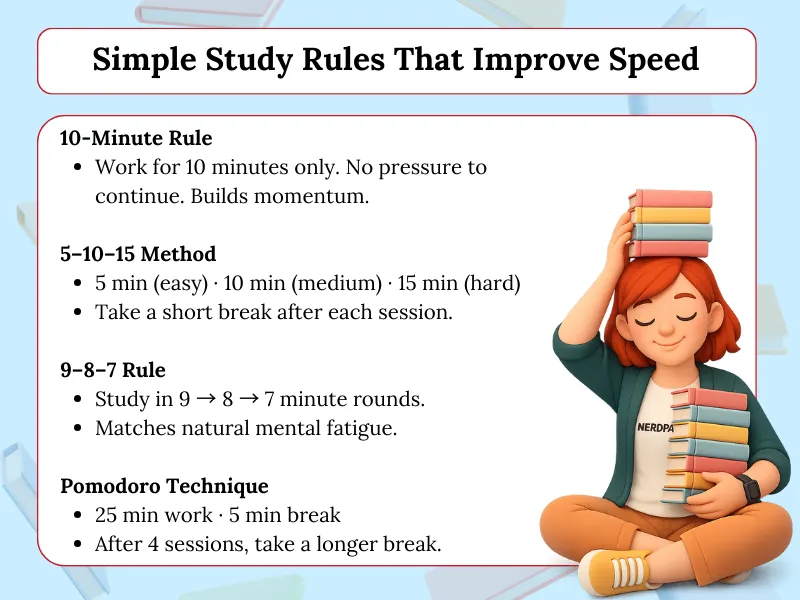
- The 10-minute homework rule: Work for 10 minutes only, with no pressure to continue. Using short study intervals can help maintain focus and build momentum.
- 5–10–15 study method: This technique advises 5 minutes for small, 10 for medium, and 15 for difficult tasks. Take a short break after each session to reset focus.
- 9–8–7 rule: Study in 9 minutes, then 8 minutes, then 7 minutes across consecutive rounds. The decreasing intervals match natural mental fatigue during long homework evenings.
- Students use the Pomodoro Technique, working for set times and taking breaks. Work for 25 minutes, then take a 5-minute break. After four study sessions, students need a longer break to avoid burnout and stay focused.
These techniques allow students to finish tasks faster without compromising their quality.
Many of the students who come to Nerdpapers have told us that they are unable to work and manage their time properly, and our experts have guided them about proper planning and time management, and how to manage their workload. They have told us that these tips help them a lot in planning and managing their days and weeks.
How to Focus on Homework and Avoid Distractions
Focusing on homework is difficult when attention is constantly pulled in different directions. Distractions such as your mobile or iPad notifications and multiple tabs on your laptop when you dont even need that many hinder concentration and slow task progress. Improving focus is about managing your environment and planning your day.
When distractions are reduced, homework becomes easier and faster to complete.
Create a Focus-Friendly Homework Environment
Your study environment directly affects concentration:
- Choose one consistent place to do homework
- Keep only the materials needed for the current task nearby
- Put your phone out of reach or in silent mode
- Close unrelated browser tabs before starting
The best places for homework are quiet, well-lit areas with few distractions and a routine.
Use Time Blocks to Improve Concentration
Long study sessions reduce focus and increase fatigue. Short, structured blocks work better:
- Set a clear start and end time for each task
- Work on one assignment at a time
- Take short breaks between sessions to reset attention
Students focus better using techniques like the Pomodoro Technique to stay engaged.
Manage Digital Distractions Properly
Digital tools can help or hurt focus depending on how they are used:
- Use app limits or focus modes during homework time
- Schedule notifications during your homework time instead of reacting to them right away
- Keep homework tools open and social apps closed
Focusing on homework minimizes study time and boosts efficiency.
Motivation Problems: When You Don’t Want to Do Homework
Most of the time, a statement often heard from the students is that I don’t have the motivation to do my homework. Lack of motivation is one of the most common homework problems, and it is often misunderstood. Most students do not avoid homework because they are lazy. They avoid it because the task feels too large, too unclear, or too stressful.
Disliking homework may indicate feeling overwhelmed, not irresponsibility.
Why Motivation Drops Before Homework
Motivation tends to disappear when:
- Assignments feel overwhelming or unclear
- There is no clear starting point
- Past stress is associated with homework
- Students wait to “feel ready” before starting
The mistake is waiting for motivation first. Motivation usually comes after action, not before it.
How to Get Motivated to Do Homework (Practically)
These steps help you start even when you don’t want to:
- Commit to just one small step instead of the full assignment
- Set a short time limit instead of an open-ended session
- Start with the easiest part to reduce resistance
- Separate starting from finishing, focus only on the beginning
This method helps students do homework even when they feel unmotivated or tired.
Turn the Avoidance Into Momentum
Once you begin working, motivation often follows. Progress reduces anxiety, and clarity replaces resistance. Students who start their homework on time report feeling less stressed, even with a lot to do.
Motivation improves when homework feels controlled, planned, and finite, not endless or chaotic.
How to Make Homework Less Boring?
Homework feels boring when it is repetitive or done in the same way. While it may not always be fun, small changes can help keep students engaged.
The goal is not to turn homework into entertainment, but to make it easier to start and stick with.
Choose the Best Places to Do Homework
Your surroundings affect attention more than most students realize.
Good places to do homework usually have:
- Minimal noise and interruptions
- Comfortable but upright seating
- Good lighting
- Limited access to distractions
Some students focus best at a desk or in a library, while others work better in quiet shared spaces. Being consistent in where you study helps your brain focus better.
Use Simple Ways to Make Homework Feel Lighter
You can reduce boredom without lowering productivity:
- Study during your most alert hours instead of forcing late-night sessions
- Use background noise only if it improves focus (not music with lyrics)
- Set small rewards after completing specific tasks
- Alternate subjects to avoid mental fatigue
These simple steps can make homework feel less tiring without avoiding study time.
Keep Engagement Without Losing Control
Making homework more engaging does not mean multitasking or constant stimulation. It’s about removing obstacles and clearly signaling when to start and stop work.
When homework is organized and has a set time limit, students can keep up even on tough days.
Homework Stress, Burnout, and Mental Load
Homework stress builds when assignments pile up without a clear system. Over time, this constant pressure affects focus, motivation, and emotional balance. Students often think they struggle with schoolwork, but it’s usually due to stress, not a lack of skill.
When homework is rushed, it causes stress, making it hard to focus and raising anxiety.
How Does Homework Stress Develop?
Homework stress typically comes from:
- Tracking assignments mentally instead of using a clear plan
- Overlapping deadlines with no priority structure
- Long study hours without breaks or recovery time
- Fear of falling behind or disappointing others
As stress increases, productivity drops. Students work longer but keep less, which accelerates burnout rather than progress.
Why Reducing Mental Load Improves Homework Performance?
Trouble focusing and irritability can be linked to homework and mental health. School pressure can increase anxiety and reduce motivation, making homework harder. Mental load is reduced when each person is taken care of individually. Focus improves, anxiety eases, and homework becomes manageable instead of emotionally draining.
Early Signs of Burnout to Watch For
- Constant exhaustion during homework
- Trouble concentrating on simple assignments
- Strong resistance or avoidance toward schoolwork
- Feeling overwhelmed even with small tasks
Recognizing these signs early and adjusting workload can help prevent burnout.
High Performers & Neurodiversity: Why One Homework System Doesn’t Work for Everyone
Not all students manage homework the same way, and that is normal. Many students are productive due to helpful focus systems, not natural talent. Others struggle despite effort because their brains process focus, time, and motivation differently.
Understanding this difference is essential for managing homework effectively.
How High-Performing Students Manage Homework
Students who consistently perform well tend to focus on process over motivation. They do not wait to feel ready. Instead, they rely on structure.
Common habits include:
- Clear daily task lists with realistic time limits
- Starting homework at the same time each day
- Working in short, focused sessions
- Stopping work once the planned task is complete
This is often what people mean when they refer to being a “top” or “1%” student. It is not about intelligence; it is about consistency, planning, and energy management.
Homework and Attention Differences
Many students ask whether people with attention-related differences take longer to do homework. They may not be less capable, but focusing takes more effort.
Students with attention challenges often enjoy:
- Shorter work sessions
- Clear, visible task lists
- Reduced distractions
- Immediate feedback or completion markers
The key is to adapt homework methods to how attention works, rather than forcing one way for everyone.
Adjust the System, Not the Student
Homework becomes manageable when strategies match cognitive needs. Students who have different learning needs perform better when homework is arranged properly. Top students succeed by developing methods that help them focus.
Effective homework management is not about forcing productivity. It is about building a system that works with your brain instead of against it.
When Homework Becomes Too Much to Handle Alone
Even with good planning, sometimes there is too much homework for a student to handle alone. This can happen during busy times like exams or personal stress. It doesn’t mean a student has failed; it means they have too much work for their time and energy.
The key is recognizing overload early instead of pushing through exhaustion.
Knowing When You Need Extra Support
Homework may be too much to handle alone when:
- Deadlines consistently overlap despite planning
- Homework regularly cuts into sleep or recovery time
- Stress remains high even after improving focus and scheduling
- Important assignments are rushed or left incomplete
In those cases, it’s better to focus on grades and mental health instead of doing everything alone.
Support Without Shame or Shortcuts
Getting help does not mean avoiding responsibility. Many students find external support helpful during stressful times to manage their workload. This might include tutoring, collaborative study, or, in some cases, professional homework help.
Students can manage their workload and deadlines with outside support. Support should help manage pressure, not replace learning or planning.
Return to Balance
Students usually begin working independently when they connect their process with more resources. When doing homework, prioritizing smart choices for learning over solitary work is crucial.
Use this checklist to stay in control of your homework instead of reacting to it:
- All assignments are written down in one place
- Deadlines clearly visible
- Tasks broken into small, manageable steps
- Time blocks assigned to each subject
- One task is worked on at a time
- Phone and digital distractions limited
- Short breaks planned to avoid burnout
- Stress level checked, not ignored
If one or more of these are missing, homework will feel heavier than it needs to be.
Final Thoughts: Homework Is a System Problem, Not a Personal Failure
Homework becomes overwhelming when it is handled mentally instead of systematically. Most students struggle because they have too much to do, not because they lack motivation.
When homework is planned and broken into clear steps, stress goes down, and focus improves. Even heavy workloads become manageable when the mental load is reduced.
The goal is not perfection or nonstop productivity. The goal is control, knowing what to do, when to do it, and when to stop. With the right systems, homework feels manageable instead of endless.
Frequently Asked Questions About Managing Homework
How can I manage homework when I have too much and not enough time?
Start by listing all assignments in one place, then rank them by deadline and importance. Break larger tasks into smaller steps and work in short, focused sessions. When time is very limited, focus on important tasks first instead of trying to do everything.
How can I stay focused while doing homework?
Focus improves when distractions are controlled. Choose one place to work, silence notifications, close extra tabs, and work on only one task at a time. Short sessions with planned breaks are more effective than long study hours.
How do I avoid distractions while doing homework?
Keep your phone away, use focus modes, and gather everything you need before starting. Distraction control is an environment issue, not a willpower issue.
What is the 10-minute homework rule?
The 10-minute homework rule means committing to work for just 10 minutes to get started. Once begun, most students continue longer because starting is often the hardest part.
How do I get motivated to do homework when I don’t want to?
Motivation usually comes after starting, not before. Begin with a small, easy task and work for a short time. Progress reduces stress, which naturally increases motivation.
Do people with ADHD take longer to do homework?
Often, yes. This is due to attention regulation challenges, not ability. Shorter work sessions, clear task lists, and reduced distractions help improve efficiency.
How can I do homework faster without rushing?
Homework gets done faster when tasks are planned and timed. Use short work sessions, avoid multitasking, and stop perfectionism early. Speed comes from clarity and focus, not pressure.
When should I consider getting help with homework?
When deadlines overlap, and stress continues despite preparation, you should get help. Support should reduce pressure, not replace learning.