

Choosing the right topic is often the hardest part of writing an annotated bibliography. With endless possibilities to explore, students can easily feel overwhelmed about where to begin. The key is to find a topic that’s not only interesting but also researchable — one that gives you enough credible sources to analyze and annotate effectively.
An annotated bibliography topic acts as the foundation of your entire research project. It determines what kind of sources you’ll explore, the questions you’ll answer, and the insights your annotations will uncover. Whether you’re working on a paper for psychology, literature, or business, selecting a focused topic helps you stay organized and confident throughout the writing process.
Before choosing a topic, make sure you understand what an annotated bibliography is, how it works and how to write one. Each one combines citation with reflection, summarizing a source while explaining why it’s relevant to your research.
In this blog, we’ll explore 180+ annotated bibliography topics across multiple fields from education and healthcare to technology and social sciences so you can find one that matches your interests and academic goals.
How to Choose a Good Annotated Bibliography Topic
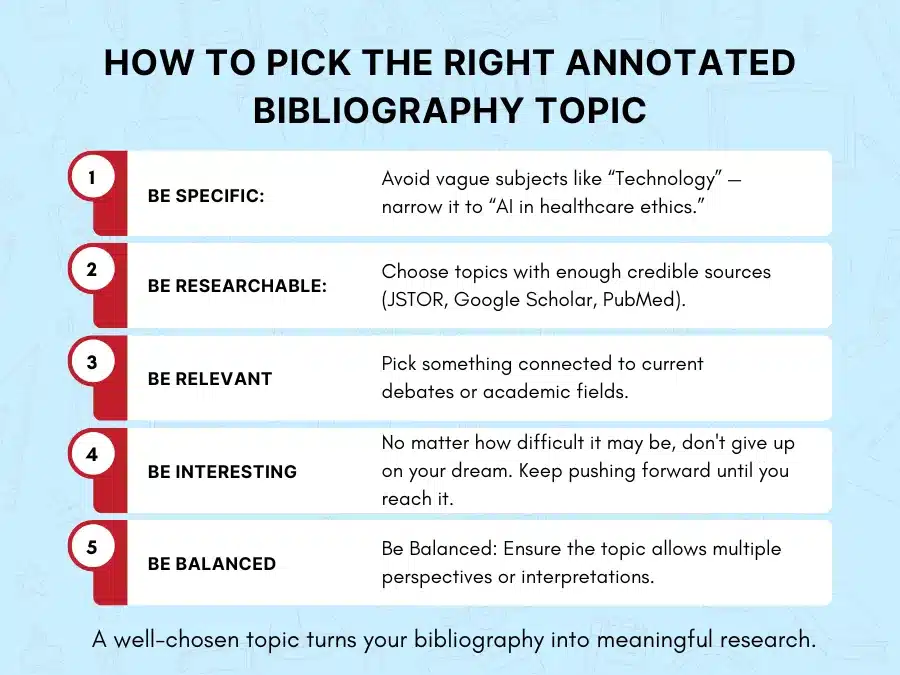
Choosing a good annotated bibliography topic isn’t just about picking something that sounds interesting, it’s about selecting a subject that allows meaningful research, credible sources, and thoughtful analysis. A well-chosen topic makes your work easier to research, write, and annotate, while a poor one can leave you struggling to find reliable material.
When picking your annotated bibliography idea, consider these key factors:
1. Research Scope
Make sure your topic is specific enough to explore deeply but broad enough to find enough sources.
Instead of “Mental health,” try “The impact of mindfulness programs on student anxiety.”
2. Availability of Sources
Before finalizing a topic, do a quick search on databases like Google Scholar, JSTOR, or PubMed. If you can’t find at least 5–7 credible sources, the topic may be too narrow or under-researched.
3. Personal Interest
Writing becomes much easier when you actually care about your topic. Choose something that sparks curiosity, it keeps you motivated through the research and annotation process.
4. Academic Relevance
Your topic should connect with your course or field of study. For instance, a psychology student might explore “Cognitive behavioral therapy for social anxiety,” while a business major could focus on “Ethical challenges in digital marketing.”
Quick Checklist for Selecting a Strong Topic
- Is it focused and specific?
- Are there enough peer-reviewed sources available?
- Does it align with your subject area?
- Am I genuinely interested in exploring it?
- Can it support both summary and analysis in my annotations?
Easy and Interesting Annotated Bibliography Topics
If you’re new to annotated bibliographies or just looking for inspiration, start with topics that are easy to research and genuinely interesting. The best beginner topics balance accessibility (plenty of available sources) with relevance to everyday issues, technology, or social trends.
Here are some easy annotated bibliography topics that can help you build confidence while improving your research skills:
- The effects of social media on student communication
- How online learning changes classroom engagement
- The influence of technology on reading habits
- The role of exercise in improving mental health
- The rise of sustainable fashion in modern culture
- How artificial intelligence affects creative industries
- The impact of sleep patterns on academic performance
- Media bias and its effect on public opinion
- The benefits of mindfulness in education
- The ethical concerns around genetic testing
- How remote work is reshaping work-life balance
- The influence of pop culture on gender perceptions
- Environmental awareness among college students
- The psychology of motivation in online learning
- The role of video games in developing problem-solving skills
Annotated Bibliography Topics for Education
Education is one of the most common and dynamic fields for annotated bibliographies. It connects research, psychology, technology, and even social change — offering a wide range of directions for analysis. Whether you’re studying teaching methods, student behavior, or educational reform, these annotated bibliography topics for education will help you explore impactful ideas.
- The impact of online learning on student motivation
- The role of teachers in developing emotional intelligence
- Inclusive education and its effect on classroom diversity
- The benefits of experiential learning in higher education
- How standardized testing affects student creativity
- The relationship between technology and classroom engagement
- Parental involvement and its influence on student performance
- How early childhood education shapes long-term academic success
- The role of play-based learning in preschool education
- Effects of classroom size on learning quality
- The rise of AI tools in personalized learning
- The connection between school infrastructure and learning outcomes
- The importance of soft skills in modern education systems
- Culturally responsive teaching practices in diverse classrooms
- The effectiveness of hybrid learning models post-pandemic
Annotated Bibliography Topics for Psychology
Psychology offers a broad spectrum of ideas for annotated bibliographies — from mental health and human behavior to cognitive processes and social interaction. These annotated bibliography topics for psychology allow you to explore research-backed concepts while connecting theory with real-world applications.
- The impact of social media on adolescent mental health
- Cognitive behavioral therapy for treating anxiety disorders
- The role of sleep in emotional regulation
- How childhood trauma influences adult relationships
- Psychological resilience in post-pandemic recovery
- The relationship between stress and academic performance
- Effects of mindfulness-based therapy on depression
- Gender differences in emotional intelligence
- The psychology behind decision-making under pressure
- The influence of parental attachment on personality development
- The rise of digital therapy and telepsychology
- The role of empathy in conflict resolution
- The psychology of motivation in sports performance
- Effects of video games on cognitive development
- The influence of group dynamics on moral judgment
Annotated Bibliography Topics for Nursing and Healthcare
Healthcare and nursing topics are among the most research-driven areas for annotated bibliographies. These subjects allow you to combine theory, ethics, and patient care while exploring current challenges and innovations in the medical field. Use these annotated bibliography topics for nursing and healthcare to develop analytical and evidence-based projects.
- The role of nurses in promoting patient-centered care
- Ethical dilemmas in end-of-life decision-making
- The impact of technology on nursing communication and documentation
- Mental health awareness among healthcare workers
- The relationship between nurse burnout and patient outcomes
- The importance of cultural competence in nursing practice
- The effectiveness of telehealth in rural healthcare delivery
- Strategies to reduce hospital-acquired infections
- The role of evidence-based practice in clinical decision-making
- Patient safety and medication error prevention
- The influence of leadership styles on nursing team performance
- The use of simulation-based training in nursing education
- Addressing health disparities through community nursing
- The impact of staffing ratios on healthcare quality
- Nursing ethics in times of public health crises
Annotated Bibliography Topics for Business and Management
Business and management topics are ideal for students exploring leadership, organizational behavior, and the evolving corporate landscape. These annotated bibliography topics for business and management encourage research into real-world business practices, ethics, innovation, and strategy.
- The impact of leadership styles on employee motivation
- Corporate social responsibility and its influence on brand reputation
- The role of emotional intelligence in effective management
- Strategies for managing remote teams in global organizations
- Ethical decision-making in business leadership
- The effects of workplace diversity on innovation
- The rise of sustainable business models in modern markets
- Crisis management and brand recovery strategies
- The influence of corporate culture on productivity
- Employee engagement and organizational success
- The future of work: automation and its business implications
- Gender equality in corporate leadership
- The importance of data-driven decision-making in business strategy
- The effects of globalization on small and medium enterprises (SMEs)
- The relationship between leadership transparency and employee trust
Annotated Bibliography Topics for Technology and AI
Technology and artificial intelligence are evolving faster than ever, shaping industries, ethics, and everyday life. These annotated bibliography topics for technology and AI focus on innovation, data ethics, and the human impact of digital transformation.
- The ethical challenges of artificial intelligence in decision-making
- The impact of automation on employment and workforce skills
- Data privacy concerns in the era of big data
- The role of AI in improving healthcare diagnostics
- Cybersecurity threats and digital resilience strategies
- The influence of social media algorithms on public opinion
- The future of education: AI-powered learning platforms
- Blockchain technology and its applications beyond cryptocurrency
- The role of technology in promoting sustainability
- Digital addiction and its psychological effects
- The impact of wearable technology on health and lifestyle
- Cloud computing and data security in global businesses
- Human-AI collaboration in creative industries
- The digital divide: inequality in technology access
- The rise of smart cities and ethical urban design
Annotated Bibliography Topics for History and Ethics
History and ethics explore the lessons of the past and the moral decisions that continue to shape societies today. These annotated bibliography topics for history and ethics help you analyze significant events, cultural shifts, and ethical dilemmas across time.
- The ethical implications of war journalism
- Historical perspectives on civil rights movements
- The role of propaganda during World War II
- Colonialism and its lasting impact on global inequality
- The ethics of historical revisionism in education
- Moral philosophy in ancient civilizations
- The ethical challenges of artificial intelligence in warfare
- The influence of religion on ethical decision-making in history
- The Nuremberg Trials and the evolution of international law
- The use of nuclear weapons: historical context and moral debate
- Slavery and economic development in the 18th and 19th centuries
- The ethics of museum curation and artifact ownership
- Historical ethics in medical experimentation
- The rise and fall of totalitarian regimes: moral lessons learned
- Truth and reconciliation commissions in post-conflict societies
Annotated Bibliography Topics for Social Work
Social work topics focus on improving community well-being, addressing social inequalities, and supporting mental health and vulnerable populations. These annotated bibliography topics for social work help explore both theoretical frameworks and hands-on social interventions.
- The impact of childhood trauma on long-term social development
- Social work approaches to reducing homelessness
- Cultural competence in modern social work practice
- The effectiveness of family-centered therapy in child welfare cases
- Social work ethics in crisis intervention
- Gender identity and inclusivity in social service programs
- The role of social workers in substance abuse rehabilitation
- Challenges in managing burnout among social workers
- Policy advocacy and the role of social workers in legislative reform
- The relationship between poverty and access to healthcare
- Addressing domestic violence through social intervention programs
- The role of community-based organizations in disaster recovery
- Social justice and equity in public welfare systems
- The influence of technology on case management and social service delivery
- Strength-based practice and its impact on client empowerment
Annotated Bibliography Topics for Literature and English
Literature and English topics allow students to analyze written works, explore linguistic trends, and interpret cultural meaning through texts. These annotated bibliography topics for literature and English focus on critical reading, comparative analysis, and literary theory applications.
- The evolution of feminism in 20th-century literature
- Symbolism and irony in modern short fiction
- The role of nature in Romantic poetry
- Postcolonial perspectives in African and Caribbean literature
- The influence of Shakespeare on modern storytelling
- The theme of identity in immigrant narratives
- The portrayal of mental illness in contemporary novels
- The intersection of literature and social justice
- The rise of dystopian fiction in the 21st century
- Language and power in political speeches and prose
- Narrative techniques in Gothic literature
- The use of satire as a tool for social commentary
- Representation of gender roles in Victorian literature
- Literary modernism and the rejection of traditional form
- The relationship between literature and historical events
Annotated Bibliography Topics for Environment and Climate
Environmental and climate-related topics are some of the most relevant in modern research. These annotated bibliography topics for environment and climate let you explore sustainability, global warming, and how human actions shape ecosystems and policy decisions.
- The effects of climate change on global food security
- Renewable energy innovation and its environmental impact
- The role of environmental education in promoting sustainability
- Urbanization and its influence on air quality
- The ethics of climate engineering and geoengineering
- Waste management and the circular economy
- The impact of deforestation on biodiversity loss
- The relationship between climate change and public health
- Ocean pollution and its long-term consequences on marine life
- The role of youth activism in environmental reform
- Corporate responsibility and greenwashing in global industries
- Environmental justice and marginalized communities
- The politics of global climate agreements (e.g., Paris Accord)
- Technology’s role in solving climate-related challenges
- Local vs. global approaches to sustainability policy
Fun and Creative Annotated Bibliography Topics
Annotated bibliographies don’t always have to be serious or academic. Exploring fun and creative annotated bibliography topics can help you think critically while researching subjects that genuinely interest or entertain you. These topics mix pop culture, art, technology, and modern social issues — perfect for students who want a refreshing research experience.
- The psychology of binge-watching TV series
- How memes shape modern digital communication
- The cultural influence of superhero movies on youth identity
- Social media challenges and their impact on online behavior
- The evolution of video game storytelling
- The role of music in stress relief and productivity
- AI-generated art and questions of creativity
- The ethics of influencers and sponsored content
- How fan fiction builds literary creativity
- The environmental impact of fast fashion trends
- Representation and diversity in animation
- The rise of e-sports as a global entertainment industry
- The relationship between technology and personal privacy
- Virtual reality as a tool for empathy and education
- The psychology of internet fame
Critical and Persuasive Annotated Bibliography Topics
Critical and persuasive annotated bibliographies focus on evaluation, debate, and argumentation. These topics challenge students to examine multiple perspectives, assess evidence credibility, and form their own analytical conclusions. Perfect for upper-level courses, they encourage critical thinking and academic reasoning.
- The ethical limits of artificial intelligence in warfare
- Censorship vs. freedom of expression in digital media
- The impact of fast fashion on consumer ethics
- Should standardized testing determine academic success?
- Climate change denial and misinformation in the media
- The morality of genetic modification in humans
- Social media’s role in shaping political opinions
- Data privacy vs. technological convenience
- The influence of advertising on body image and consumer behavior
- Universal basic income: solution or illusion?
- The power of protest movements in modern democracy
- Should animal testing be completely banned in science?
- The balance between free speech and hate speech regulation
- The role of the press in shaping public morality
- Government surveillance and personal liberty
How to Turn an Annotated Bibliography Topic into a Research Question
Once you’ve chosen your annotated bibliography topic, the next step is to refine it into a clear, focused research question. This helps guide your search for sources and ensures your annotations have a clear analytical purpose.
A topic is broad and general, while a research question narrows it down to a specific inquiry. Turning topics into questions allows you to identify cause-and-effect relationships, analyze trends, or explore contrasting perspectives — all of which make your bibliography more insightful.
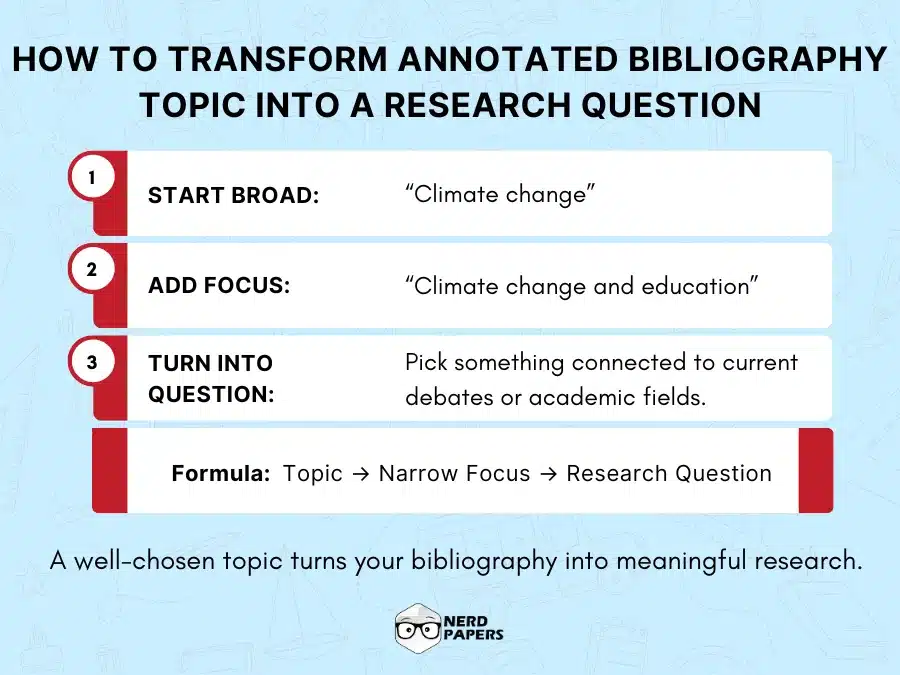
Example Transformations:
When you base your annotated bibliography on a well-formed research question, each source serves a clear role — supporting, opposing, or expanding on your main line of inquiry. This makes your final bibliography more cohesive, analytical, and academically valuable.
| Broad Topic | Focused Research Question |
| Social media and mental health | How does Instagram affect self-esteem among college students? |
| Climate change and policy | What policies have been most effective in reducing carbon emissions in urban areas? |
| Online learning in education | How does virtual learning impact student engagement compared to traditional classrooms? |
| Artificial intelligence ethics | What ethical challenges arise from using AI in hiring and recruitment processes? |
| Public health and misinformation | How does misinformation on social media influence vaccine hesitancy? |
Conclusion
Choosing the right annotated bibliography topic is the foundation of strong academic research. The topic you pick shapes your sources, analysis, and the quality of your final insights. Whether you’re exploring psychology, technology, literature, or healthcare, a clear and relevant topic helps you think critically and stay focused.
Start with an area that genuinely interests you, narrow it into a focused research question, and use credible sources to support your findings. Remember — a well-chosen topic doesn’t just make your annotated bibliography easier to write; it makes it more meaningful to read.
FAQs About Annotated Bibliography Topics
What are good topics for an annotated bibliography?
Good annotated bibliography topics are focused, researchable, and relevant to your field. Examples include mental health and social media, AI ethics in hiring, and climate change communication. Choose a topic that allows for credible, peer-reviewed sources.
How do I choose a topic for an annotated bibliography?
Start by selecting a subject area you’re genuinely interested in — such as psychology, technology, or literature. Then narrow it down to a specific question or problem that can be explored through research and analysis.
What are some easy annotated bibliography topics for beginners?
Easy topics include the role of social media in education, sleep and student productivity, and the effects of exercise on mental health. These areas have abundant sources and straightforward research angles.
Can I use the same topic for an annotated bibliography and a research paper?
Yes, and it’s often a smart idea. Many students use an annotated bibliography as a foundation for a future research paper because it helps them gather and evaluate sources early in the writing process.
How many sources should I include for my annotated bibliography?
Most assignments require between 5 and 10 sources, but this varies by academic level. Always check your instructor’s guidelines before finalizing your bibliography.
Can annotated bibliography topics be interdisciplinary?
Absolutely. Interdisciplinary topics—like the psychology of consumer behavior or AI in education—are encouraged because they connect multiple fields and demonstrate deeper critical thinking.
What citation style should I use for my annotated bibliography?
The required citation style depends on your discipline:
If you are in the social sciences, you will likely need an APA style annotated bibliography format.
MLA for literature, humanities, and arts
Chicago or Harvard for history and business
Always follow your instructor’s specified format.
What makes a topic suitable for critical or persuasive annotated bibliographies?
A strong topic should invite analysis or debate, not just summary. For example, Should gene editing be regulated globally? or Does social media harm democracy? Such topics allow you to assess multiple perspectives and form reasoned judgments.